Raid on a Bivouac
Translation details
Model:mistral-large-2512.Translated text
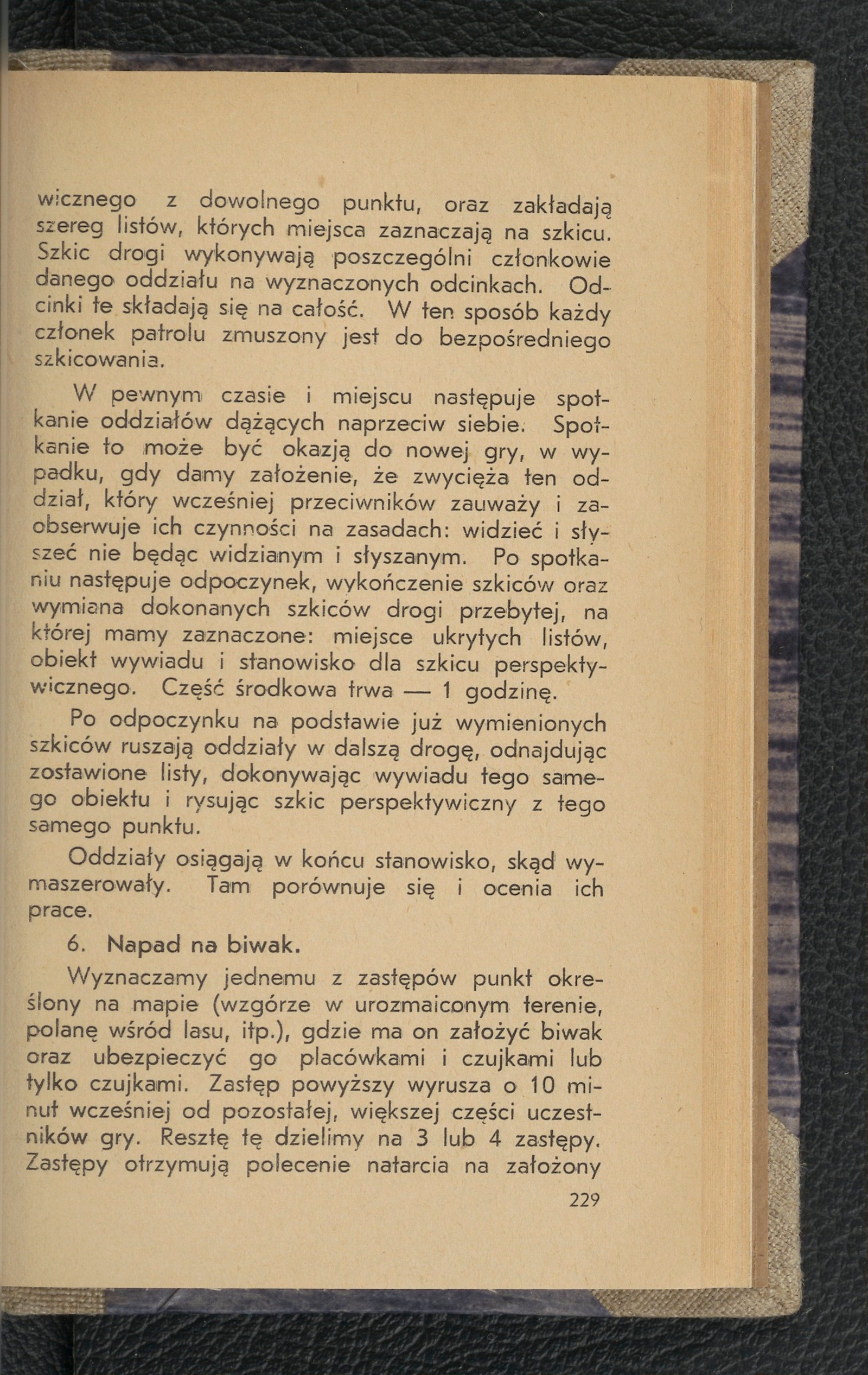
Section titled “Translated text”One patrol is assigned a specific point on the map (a hill in varied terrain, a clearing in the forest, etc.), where it is to establish a bivouac and secure it with outposts and sentries or just sentries. This patrol sets out 10 minutes earlier than the remaining, larger part of the game participants. The rest are divided into 3 or 4 patrols. These patrols receive orders to attack the established bivouac. They are given the bivouac’s location on the map and assigned a direction (according to the cardinal points) from which each patrol is to strike the bivouac. Additionally, the exact time for the attack to begin is set (synchronize watches before dispersing).
Each patrol selects its route using the map, carefully examines the terrain nearest the bivouac, and devises a plan for the closest approach, conducted in complete concealment. En route, patrols advance in patrol formation.
The patrols encircling the bivouac will have a more challenging task, as they must hurry to take up attack positions. Other groups will need to delay their march. If the attacking patrols manage to occupy their attack positions unnoticed and execute a simultaneous joint assault, victory is theirs. However, if the bivouac patrol, thanks to its sentries or dispatched scouts, knows the positions of the opponents and preempts their attack by directing its own assault against any of the attacking units, it is considered that the bivouac patrol has repelled the enemy.
A variation of this game may be assigned to the bivouac patrol:
Source scan: Polona / National Library, marked “Public Domain”. View scan — page 237.
Metadata
Section titled “Metadata”- Type: game
- Traits: Not stated in the source
- Source: Jan Jasiński, Gry i ćwiczenia terenowe (Harce terenowe) (1938)
- Printed pages: 229–230
- Digital edition: Digital edition · Source record
- Open the edition at the relevant page: p. 229
- Read the source text: gct-191