Spy Crossing the Border
Translation details
Model:mistral-large-2512.Translated text
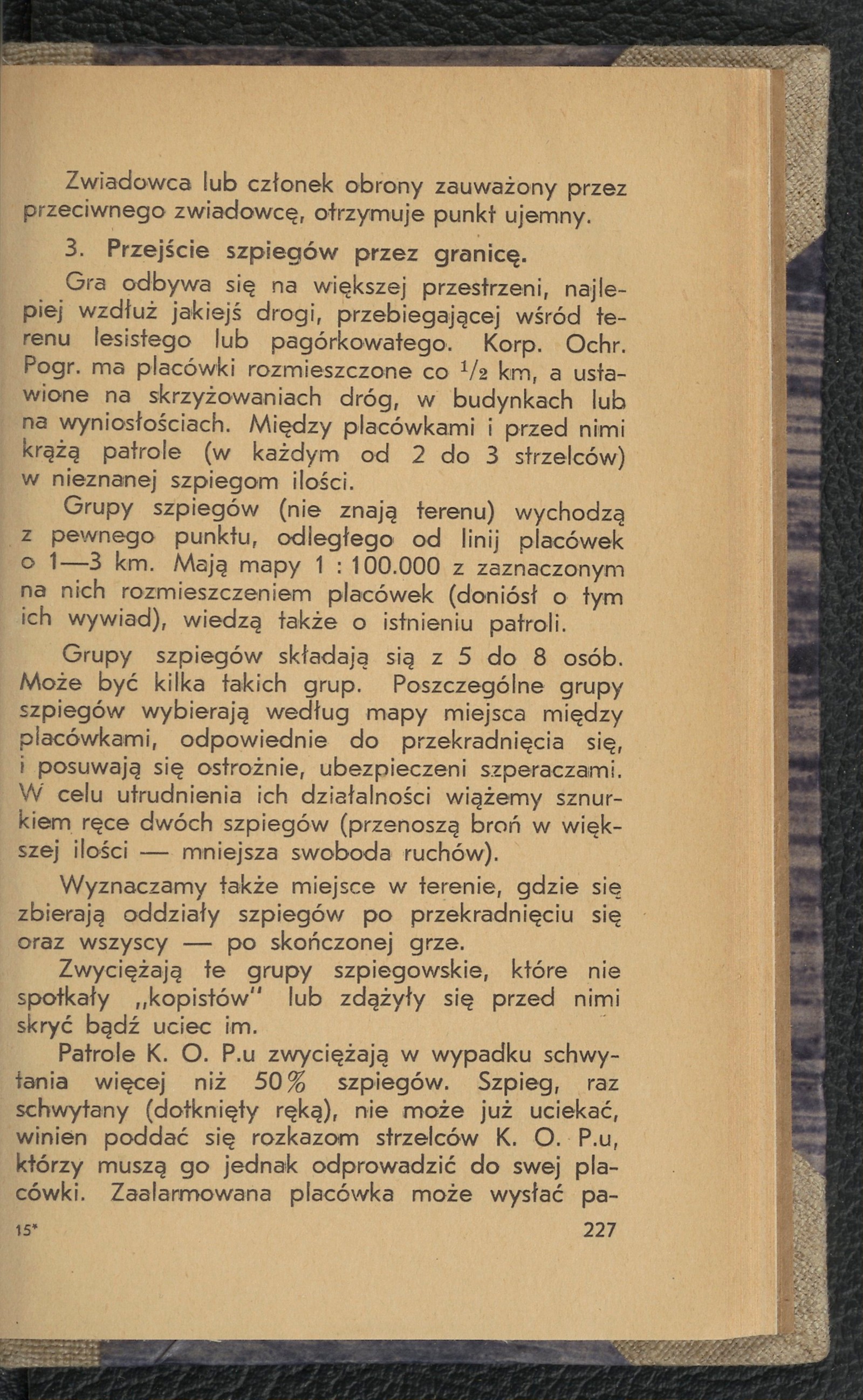
Section titled “Translated text”The game takes place over a larger area, preferably along a road running through wooded or hilly terrain. The Border Protection Corps has outposts positioned every half a kilometer, set up at road intersections, in buildings, or on elevations. Between and ahead of the outposts, patrols (each consisting of between 2 and 3 riflemen) move about in numbers unknown to the spies.
Spy groups (unfamiliar with the terrain) start from a point 1—3 kilometers away from the outpost line. They have maps scaled 1 : 100.000 with the outpost positions marked on them (reported by their intelligence) and are also aware of the existence of patrols.
Spy groups consist of 5 to 8 individuals. There may be several such groups. Each spy group selects, based on the map, locations between outposts suitable for sneaking through and advances cautiously, covered by scouts. To hinder their activities, we tie the hands of two spies together with a rope (they carry more weapons—less freedom of movement).
A location in the terrain is also designated where spy units gather after crossing and where everyone assembles after the game ends.
The spy groups that win are those that do not encounter “patrols” or manage to hide from or escape them.
Border Protection Corps patrols win if they capture more than 50 percent of the spies. A spy, once caught (touched by hand), can no longer escape and must submit to the orders of the Border Protection Corps riflemen, who must, however, escort them to their outpost. An alerted outpost may send additional patrols or redeploy patrols operating in the area to threatened locations. Spies may disguise themselves.
Source scan: Polona / National Library, marked “Public Domain”. View scan — page 235.
Metadata
Section titled “Metadata”- Type: game
- Traits: Not stated in the source
- Source: Jan Jasiński, Gry i ćwiczenia terenowe (Harce terenowe) (1938)
- Printed pages: 227–228
- Digital edition: Digital edition · Source record
- Open the edition at the relevant page: p. 227
- Read the source text: gct-188