Enemy Patrols in the Field
Translation details
Model:mistral-large-2512.Translated text
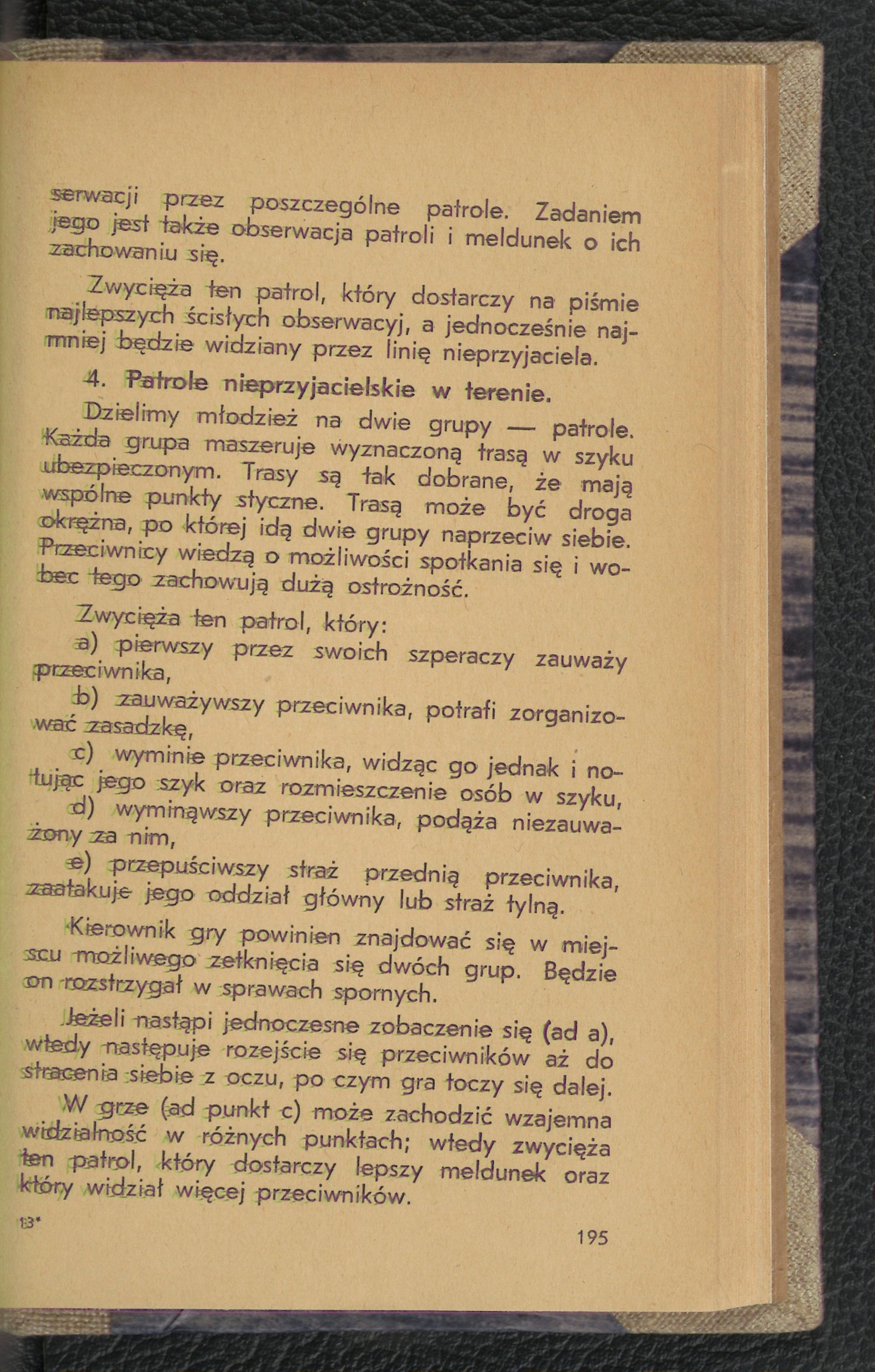
Section titled “Translated text”Divide the youth into two groups—patrols. Each group marches along a designated route in a secure formation. The routes are arranged so that they have common points of contact. The route may be a circular path along which the two groups move toward each other. The opponents are aware of the possibility of encountering one another and thus maintain great caution.
The patrol that prevails is the one that:
- a) first spots the enemy through its scouts,
- b) having spotted the enemy, is able to organize an ambush,
- c) bypasses the enemy while still observing and noting their formation and the arrangement of individuals within it,
- d) having bypassed the enemy, follows them undetected,
- e) having allowed the enemy’s vanguard to pass, attacks their main unit or rear guard.
The game leader should be positioned at a possible point of contact between the two groups. They will resolve any disputes.
If simultaneous sighting occurs (as in point a), the opponents then separate until they lose sight of each other, after which the game continues.
In the scenario described in point c, mutual visibility may occur at various points; in such cases, the patrol that delivers the better report and observes more of the enemy prevails.
Source scan: Polona / National Library, marked “Public Domain”. View scan — image 203.
Metadata
Section titled “Metadata”- Type: game
- Traits: Not stated in the source
- Source: Jan Jasiński, Gry i ćwiczenia terenowe (Harce terenowe) (1938)
- Printed pages: 195
- Digital edition: Digital edition · Source record
- Open the edition at the relevant page: p. 195
- Read the source text: gct-135