The Deaf-and-Dumb
Translation details
Model:mistral-large-2512.Translated text
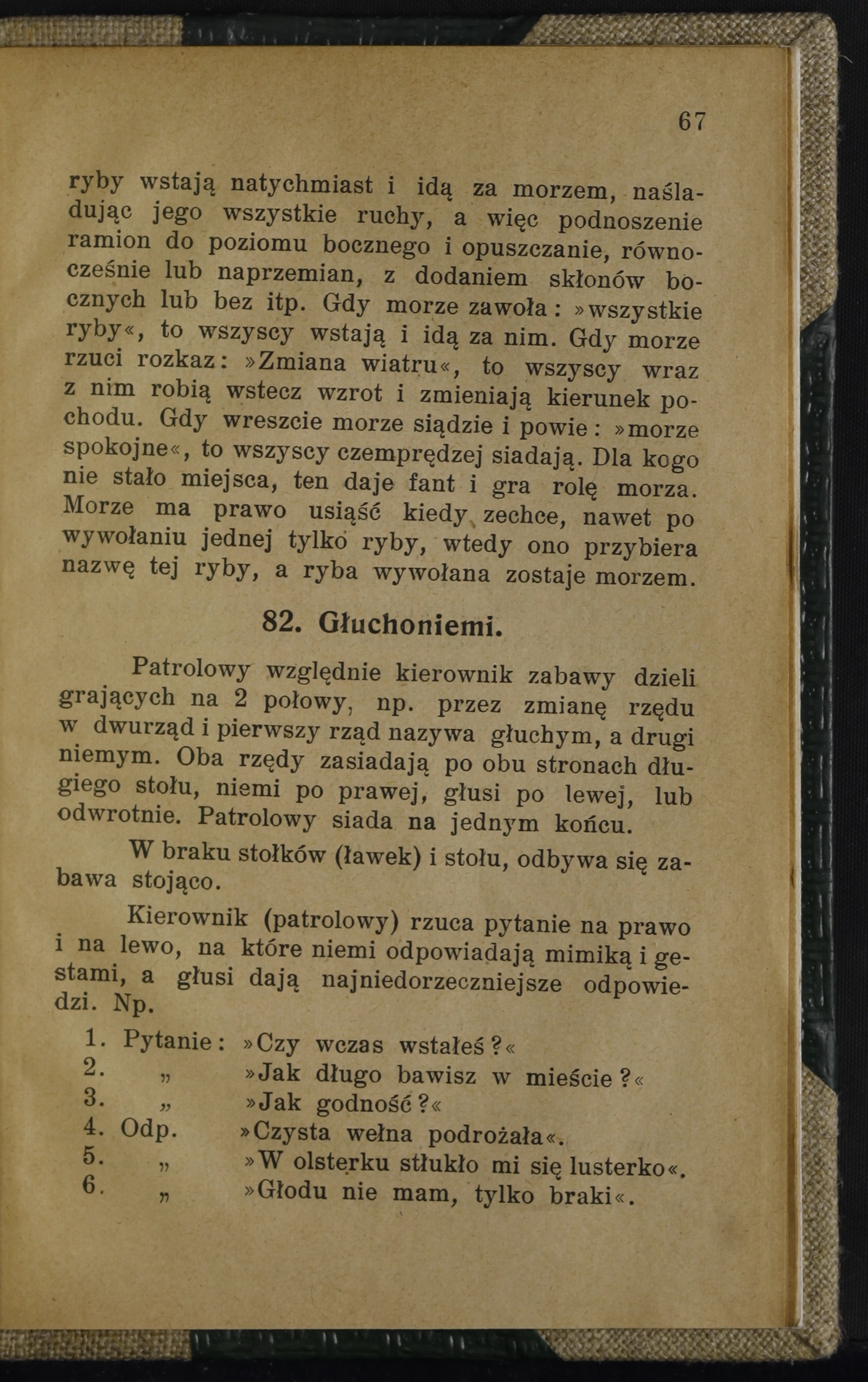
Section titled “Translated text”The patrol leader or game master divides the players into 2 halves, for example by rearranging a double line into two single lines, calling the first line the deaf and the second the dumb. Both lines sit on either side of a long table, the dumb on the right, the deaf on the left, or vice versa. The patrol leader sits at one end.
If benches and a table are lacking, the game is played standing.
The leader (patrol leader) poses a question to the right and to the left, to which the dumb respond with mime and gestures, while the deaf give the most absurd answers. For example:
- Question: “Did you get up early?” 2. “How long have you been in town?” 3. “What is your name?” 4. Answer: “Pure wool has gone up in price.” 5. “I broke my mirror in the holster.” 6. “I’m not hungry, just short.”
The more accurate the mimed response and the more absurd the answers of the deaf, the merrier and livelier the game becomes. To prevent players from having too much time to think or prepare their answers, the patrol leader switches the roles of both sides—that is, the deaf lose their hearing and regain their speech, while the dumb regain their hearing and lose their speech. The dumb forfeit a token for every word spoken, and the deaf for every sign of hearing.
Source scan: Polona / National Library, marked “Public Domain”. View scan — page 79.
Metadata
Section titled “Metadata”- Type: game
- Traits: Not stated in the source
- Source: Herman A. Mojmir, Ćwiczenia i zabawy skautowe (1912)
- Printed pages: 67–68
- Digital edition: Digital edition · Source record
- Open the edition at the relevant page: p. 67
- Read the source text: ciz-082