Urban Object Scouting
Translation details
Model:mistral-large-2512.Translated text
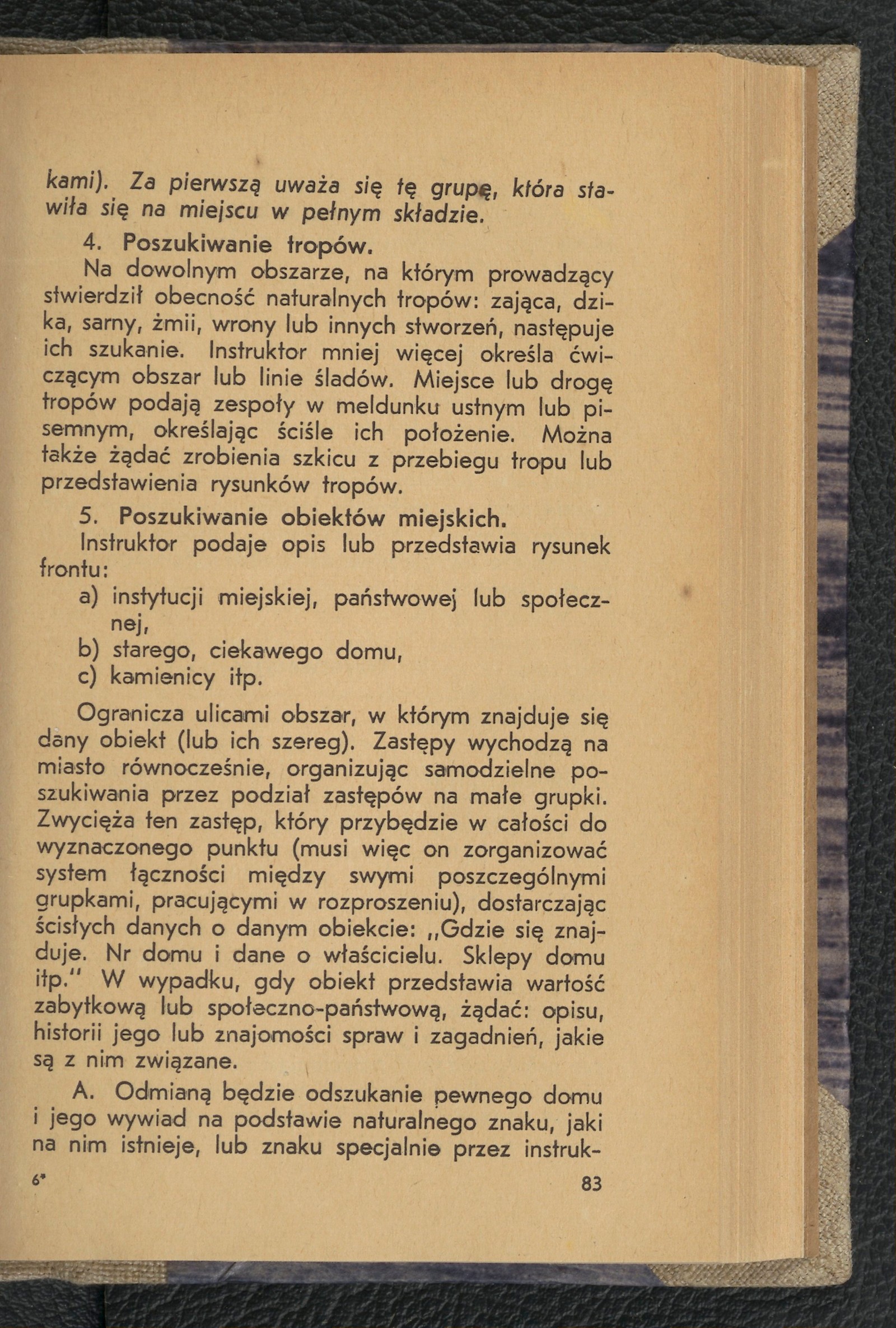
Section titled “Translated text”The instructor provides a description or presents a drawing of the facade of: a) a municipal, state, or social institution, b) an old, interesting house, c) a tenement building, etc.
The area where the given object (or series of objects) is located is defined by streets. Patrols set out into the city simultaneously, organizing independent searches by dividing into small groups. The patrol that arrives in full at the designated point (thus, it must organize a communication system among its dispersed small groups) and provides precise details about the object wins: “Where it is located. House number and owner details. Shops in the building, etc.” If the object holds historical or socio-political value, require: a description, its history, or knowledge of the matters and issues associated with it.
A. A variation involves locating a specific house and gathering information about it based on a natural feature present on it or a special mark placed by the instructor (e.g., a coat hung on a particular balcony or a white flag in a certain window). A secondary task may be to sketch the house’s facade.
B. Another variation involves searching for a shop based on a description of one of its details. This exercise can include an observational-memory game (shop kima). In this case, one of the instructors must be near the shop to supervise the time spent observing the display and prevent note-taking during observation. After leaving, the patrol reconstructs, without time constraints, the items displayed in the shop window and their arrangement. Simultaneously, they provide a report on the shop, emphasizing matters related to domestic industry and trade.
Source scan: Polona / National Library, marked “Public Domain”. View scan — image 91.
Metadata
Section titled “Metadata”- Type: game
- Traits: Not stated in the source
- Source: Jan Jasiński, Gry i ćwiczenia terenowe (Harce terenowe) (1938)
- Printed pages: 83–84
- Digital edition: Digital edition · Source record
- Open the edition at the relevant page: p. 83
- Read the source text: gct-005